
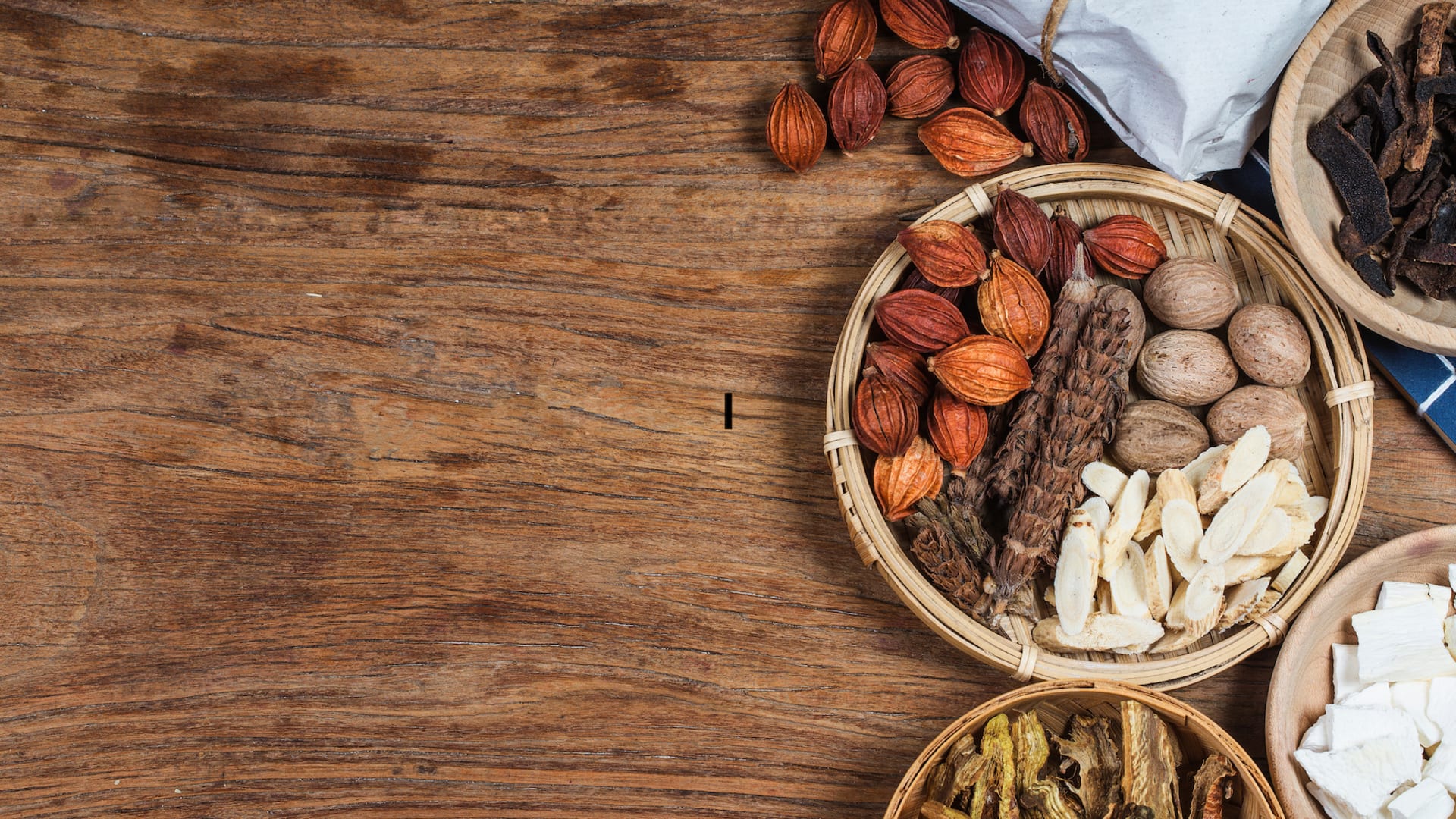
A Note on Chinese Herbal Medicine Safety
Chinese herbal medicine, when practiced by a licensed and trained professional, has an excellent safety record. Our practitioners are trained to assess for herb-drug interactions, are familiar with both classical and modern safety research, and prescribe thoughtfully with your full health picture in mind. We source our herbal products from reputable suppliers who test for heavy metals, contaminants, and adulteration. We do not use animal products as ingredients. If you have questions about the safety of a particular herb or formula relative to your medications or health conditions, please ask your providers.
DEFINITION
What is Chinese Medicine?
Most people have heard of acupuncture. Far fewer know that acupuncture is just one branch of a far larger, more comprehensive medical tradition — one that has been practiced, refined, and documented continuously for over three thousand years. Chinese medicine is a complete system of healthcare with its own theories of physiology, diagnosis, and treatment. It has its own understanding of how the body works, why it gets sick, and how it heals. It has a full toolbox of therapeutic strategies that extends well beyond needles, and it is a perfect player in the Integrative Medicine model.
At the heart of Chinese medicine is a profound diagnostic method called pattern differentiation, the underlying pattern of imbalance that drives all your symptoms. Two people with the same Western diagnosis — say, chronic fatigue or anxiety — may have entirely different Chinese medicine patterns, and therefore receive varying treatment plans. This individualized approach is one of Chinese medicine's greatest strengths.
What follows from that diagnosis is a treatment plan drawn from the Eight Branches of Chinese medicine: the ancient system's full toolkit. Depending on what your pattern calls for, your practitioner may prescribe a custom herbal formula, therapeutic dietary changes, a movement practice, meditation and breathwork, acupuncture or energy/bodywork, or some combination of these. The consultation is where everything begins, and often where the most important work happens.
The Eight Branches: Therapeutic Toolkit
Chinese medicine tradition recognizes the Eight Branches — eight distinct therapeutic arts that together constitute the complete system.
1. Chinese Nutritional Therapy — In Chinese medicine, food is the first medicine. Before acupuncture, before herbs, a skilled practitioner considers what you eat and how you prepare it. Chinese dietary therapy is not about restriction or food lists. It is about understanding the therapeutic nature of foods — their temperatures, flavors, and affinities for specific organ systems — and using them to gently shift your pattern over time. A patient with a cold, deficient pattern may be guided toward warming, nourishing stews and soups. A patient with heat and inflammation may benefit from cooling foods. Cooking methods matter too: roasting, steaming, stewing, and stir-frying each have different therapeutic effects on the body. Your practitioner will offer specific, practical, season-appropriate guidance.
2. Chinese Herbal Medicine — Chinese herbal medicine is one of the most sophisticated pharmacological traditions in the world, with a written record of over 2,000 years and a materia medica of hundreds of medicinal substances — plants, minerals, and other natural materials. The art lies not in individual herbs but in formulas: precise combinations of ingredients, calibrated to your specific pattern, designed to address multiple aspects of your imbalance simultaneously. These formulas are not off-the-shelf supplements but personalized prescriptions, often modified as your condition evolves. Herbal medicine can be particularly powerful for chronic conditions, hormonal health, digestive issues, skin conditions, and cases where acupuncture alone is insufficient. Dr. Tiffany Hoyt holds a dedicated Master's degree in Chinese Herbal Medicine and is one of our primary herbal prescribers.
3. Acupuncture — The insertion of fine, sterile needles at specific points along the body's meridian network regulates the flow of Qi, clears blockages, and supports the body's self-healing processes. (See our dedicated Acupuncture and Chinese Medicine page for full details on this branch.)
4. Moxibustion — Moxibustion is the therapeutic burning of dried mugwort (moxa) near or on acupuncture points to introduce warmth into the body. It is particularly effective for cold and deficient conditions: low energy, certain types of pain, immune depletion, cold extremities, and some gynecological conditions. Moxa has a uniquely penetrating warmth that, as the classical texts describe, reaches into the bones. It is often used alongside acupuncture but can be a standalone treatment.
5. East Asian Bodywork — Traditional Chinese bodywork encompasses a range of hands-on therapies: tuina (therapeutic massage and manipulation), acupressure, cupping, gua sha (therapeutic scraping), and Sho-ni-shin (Japanese pediatric bodywork). These techniques release muscular tension, break up stagnation, promote circulation, and help to regulate the nervous system. They are particularly valuable for pain conditions, musculoskeletal issues, respiratory conditions, and patients who prefer or need a needle-free approach.
6. Movement Therapy (QiGong and Tai Chi) — Therapeutic movement is a cornerstone of Chinese medicine. QiGong — a practice of slow, intentional movement, coordinated breath, and focused attention — is medicine in motion. Different QiGong forms are recommended for different patterns and conditions: some cultivate energy, some release it, some strengthen specific organ systems. Tai Chi, the martial art that evolved from QiGong principles, offers similar benefits with an added dimension of balance and coordination. Our practitioners teach basic QiGong and breathing practices as part of treatment, giving you tools to support your healing between sessions.
7. Meditation and Mind Cultivation — Chinese medicine has always understood that the mind and body are one. Emotional patterns — chronic worry, unexpressed grief, prolonged fear, suppressed anger — have direct effects on organ function and Qi flow. Therapeutic meditation, breathwork, and mind cultivation practices address this relationship. These practices are not add-ons but fundamental medicine. Dr. Tiffany Hoyt has practiced and taught meditation for decades and integrates this branch as a core part of her care.
8. Feng Shui and Environmental Harmony (Ba Zi) — The most overlooked of the Eight Branches, Feng Shui — the art of aligning one's environment to support health and vitality — and Ba Zi — Chinese constitutional astrology — offer a framework for understanding how a person's relationship to time, space, and season affects their health. While this branch tends to complement rather than anchor a clinical plan, it reflects Chinese medicine's fundamental premise: that health is not just an internal state but a dynamic relationship between the person and their whole environment.
INDICATIONS
What conditions does it help with?
ADVANTAGE
Why Chinese Medicine at GWCIM?
GWCIM offers something rare: senior practitioners whose Chinese medicine expertise is embedded within a larger integrative medical education. Our Chinese medicine providers collaborate regularly with GWCIM's physicians, naturopaths, and mental health specialists. This means your Chinese medicine care doesn't exist in isolation — it is part of a coordinated, whole-person approach.
APPROACH
How do we do it at GWCIM?
At GWCIM, you'll receive an individualized Chinese medicine assessment that begins with a thorough intake, physical examination, and identification of your Pattern of Disharmony diagnosis. But before we move to acupuncture or herbal prescriptions, our doctors will explain how this pattern developed — how life changes, habits, early life events, places you've lived, family history, the food you eat, and your sleep and exercise habits may either support your vital Qi and health or compromise it and lead to this pattern of disharmony and, consequently, illness.
You'll understand a more complete picture of everything that shapes your health and how you can slowly begin adopting healthier choices. Our doctors will break this down into small, achievable steps and support you along the way.
In addition to this education, we offer comprehensive healing — whether that's dietary changes and herbal formulas, acupuncture and tuina, or meditation and qigong. Our goal is to gently invite your vital Qi to recover and thrive.
Many of our patients seek Chinese medicine consultations not because they're sick, but to learn how they can stay healthy, increase their stamina, and support longevity.
At GWCIM, we integrate the wisdom of other modalities like functional and naturopathic medicine, psychotherapy, and Somatic Experiencing, when necessary, as part of our holistic approach.
Care Options
Initial Chinese Medicine Consultation 60-90 min
The initial consultation is always in-person, as it includes a physical examination—pulse diagnosis, tongue assessment, and evaluation of posture and other physical signs. Based on these findings, your doctor may also prescribe a Chinese herbal formula and/or begin acupuncture treatment during the same visit.
Follow-up Chinese Medicine Consultation
Follow-up consultations are designed to discuss your response to treatment and modify your diet and herbal formula if needed, based on changes in your symptoms and physical signs such as your pulse and tongue.
Acupuncture Appointments
Follow-up acupuncture appointments allow your practitioner to assess how your body has responded to previous treatments and adjust the acupuncture points and techniques accordingly. Each session builds on the last, refining the treatment to address evolving symptoms and guide your body toward deeper balance and healing.
Chinese Medicine Bodywork
Depending on your needs, we may focus on cupping, moxibustion, and tuina (Chinese massage) — all of which can be performed as standalone treatments without acupuncture.
QiGong, Meditation and Movement
Some appointments may focus on teaching you Qigong exercises, meditation techniques, and therapeutic movements designed to strengthen your Qi, reduce stress, and support healing.
EXPERTISE
Recommended Providers
Tiffany Hoyt, DAOM, M.Ac., M.CHM, Dipl. O.M., LAc
Chinese Medicine Doctor

Deirdre Orceyre, ND, MSOM, L.Ac.
Naturopathic and Chinese Medicine Physician, Naturopathic Medical Director

Angela Gabriel, MSOM, LAc, SEP
Chinese Medicine Doctor, Somatic Experiencing Practitioner

Ashley Drapeau, PA-C, L.Ac., MPAS, MAC
Medical Director | Functional Medicine | Long-Covid Program Director
LEARN MORE
What to expect as a patient
- Better sleep, digestion, mood, and energy levels
- A noticeable reduction in pain and fatigue within 4–10 sessions
- A written or verbal treatment roadmap showing expected progress milestones
- Specific, trackable outcomes such as fewer pain flare-ups, improved stamina, or normalized menstrual cycles
- Regular reassessment so they know whether the treatment is working and what adjustments are needed
FAQ
Common Questions
Acupuncture is one branch of Chinese medicine — a powerful one, but one among eight. Acupuncture may or may not be part of your initial plan, depending on what your pattern calls for and your interest. Many patients find they respond most powerfully to herbal medicine or dietary changes.
Pattern differentiation is the cornerstone of Chinese medicine diagnosis. Rather than categorizing patients by disease name, Chinese medicine categorizes the body's state of imbalance. Two patients with the same Western diagnosis — insomnia, for example — may have completely different Chinese medicine patterns: one might have Heart-Kidney disharmony with depleted Yin, while another has Liver Qi stagnation generating heat. These patterns require entirely different treatments. This is why a cookie-cutter approach fails in Chinese medicine, and why the consultation — where your individual pattern is carefully assessed — is the heart of care.
Herbs are never mandatory. If your pattern calls for herbal medicine and you are on medications, your practitioner will carefully assess potential interactions before recommending any formula. Chinese herbal medicine has a strong safety record when prescribed by a trained and licensed practitioner who is aware of your full medication list. If herbs are not appropriate for your situation, there is a full toolkit of other approaches available.
Yes — and this is one of its great strengths. Chinese medicine is an excellent complement to conventional care. It is not an alternative to needed medications or procedures; it is a parallel and supportive layer of care that can help manage side effects, support recovery, improve energy and resilience, and address the aspects of your health that conventional medicine is less equipped to treat. Our practitioners are experienced in coordinating with conventional providers.
Very different from a typical "diet." Chinese nutritional therapy is not about calorie counting or eliminating food groups. It is about choosing foods, flavors, cooking methods, and eating habits that support your specific pattern. A practitioner might recommend warm, cooked meals (rather than raw foods) for a patient with depleted Yang energy, or suggest incorporating specific warming spices, bone broth, or dark leafy greens based on what the body needs. Recommendations are practical, culturally sensitive, and designed to be sustainable long-term — because in Chinese medicine, your daily food is your most reliable medicine.
Yes. Chinese medicine is safe and effective for all ages. For younger children who cannot take herbs or tolerate needles, Sho-ni-shin (Japanese non-insertion pediatric bodywork) and dietary and daily routine guidance are often the primary tools. Herbal formulas can be customized for children's smaller dosing needs. Please let us know your child's age and specific concerns when scheduling. We don’t see children younger than 3 years old.
Quite possibly, yes. If acupuncture was the only treatment you tried, you may not have accessed the full power of the system. Herbal medicine and therapeutic nutrition, in particular, often produce effects that acupuncture alone cannot. Additionally, different styles of acupuncture (TCM, Japanese, Five Element) can produce very different results for different people. A thorough Chinese medicine consultation allows us to identify the approach — and the branches of the system — most likely to work for you.
EDUCATION