

DEFINITION
What is Acupuncture and Chinese Medicine?
What is Acupuncture and Chinese Medicine?
Chinese medicine is one of the world's oldest continuously practiced medical systems — with a history spanning thousands of years and a depth of knowledge that modern science continues to validate. At its heart, Chinese medicine views health holistically: the body, mind, and spirit are not separate compartments but an interconnected whole. Illness arises when this whole falls out of balance, and healing happens when balance is restored.
Acupuncture is one of the most utilized branches of this rich medical tradition, but it is only one part of a comprehensive system that also includes herbal medicine, therapeutic nutrition, meditative practices like QiGong and breathwork, and physical movement arts like Tai Chi. Together, these tools give practitioners a nuanced and powerful set of ways to support your health — addressing the underlying patterns of disharmony that create diseases.
In a typical acupuncture treatment, your practitioner carefully inserts between one and twenty hair-thin, sterile stainless-steel needles into specific points on the body. You rest comfortably for up to 30 minutes while the needles do their work. The experience is generally gentle and deeply relaxing. Acupuncture is safe for all ages, from infants to elders, and can be used alongside conventional medical treatments or as a standalone therapy.
Qualifications & Background
All of our acupuncturists are fully licensed practitioners (L.Ac.) with advanced graduate degrees in Chinese medicine, at minimum a Master's level, and in many cases a Doctorate. Our providers are nationally board-certified through the National Certification Commission for Acupuncture and Oriental Medicine (NCCAOM) and hold additional certifications in their individual specialties. Collectively, our acupuncture team brings over 70 years of combined clinical experience and advanced training across a remarkable breadth of Chinese medicine traditions and integrative health disciplines.
INDICATIONS
What conditions does it help with?
ADVANTAGE
Why Chinese Medicine at GWCIM?
GWCIM has been offering acupuncture and Chinese medicine services since 1998 — making us one of the most established integrative medicine practices in Washington, DC. What sets us apart is not just the experience of our individual practitioners, but the depth and variety of expertise across our entire acupuncture team, and the seamless integration of that expertise with the rest of our clinical family.
At most practices, you might find one style of acupuncture and one clinical perspective. At GWCIM, you have access to four senior acupuncturists who together cover virtually every major school of Chinese medicine. This means we can find exactly the right approach for you, your body, and your health goals.
Styles of Acupuncture and Chinese Medicine We Offer
Our four acupuncturists are trained across the full spectrum of Chinese medicine traditions, so you can receive care in the style that resonates most with you — or let your practitioner choose the approach best suited to your condition:
- Traditional Chinese Medicine (TCM)
- Classical Chinese Medicine
- Five Element Acupuncture, Worsley style
- Japanese-style Acupuncture, Toyohari style
- Japanese-style Acupuncture, Kiiko Matsumoto style
- Microneedling and Facial Acupuncture
- Chinese Herbal Medicine
- Sho-ni-shin (Japanese pediatric massage)
APPROACH
What Can You Expect?
Before your first treatment, your acupuncturist takes time to understand your full health picture — your history, your lifestyle, your goals, and the patterns your body is expressing. In Chinese medicine, this assessment goes beyond a list of symptoms. Your practitioner will observe your pulse at three positions on each wrist (each reflecting different organ systems), examine your tongue, and listen carefully to the story your body is telling. This deep listening shapes a treatment plan that is genuinely tailored to who you are.
Treatment at GWCIM goes well beyond needles and points. Depending on what your body needs, your session may incorporate moxibustion (therapeutic heat), cupping and gua sha to release tension and improve circulation, acupressure, ear or scalp acupuncture, electro-stimulation, LED light therapy (AcuLight), Chinese herbal formulas, or dietary and nutritional guidance grounded in Chinese medical principles. We also teach QiGong, meditation, and breathing practices that you can take home and use between sessions.
What makes our approach truly integrative is the connection between our acupuncturists and the broader GWCIM team. If your care would benefit from coordination with a functional medicine physician, a naturopath, a mental health provider, or another specialist, that collaboration happens naturally within our practice.
Naturalism: Harmony with Nature's Rhythms
Health aligns with natural phenomena, seasonal cycles, natural foods, and earth's remedies—preventing imbalance through environmental attunement.
Holism (The Body as a Unified System)
CM views the body as an interconnected whole, not as separate, independent parts. Physical, emotional, and mental aspects are all intertwined and influence each other. Illness in one area affects the entire system.
Differentiated Pattern of Disharmony Over Disease
Pattern Over Disease Chinese Medicine does not treat named diseases — it reads patterns of disharmony unique to each person. Two people with the same Western diagnosis may have entirely different patterns and require entirely different treatment. The practitioner listens for the underlying landscape, not just the presenting complaint.
Yin and Yang (Balance and Harmony)
Yin and Yang are opposing but complementary forces that exist in everything. Health depends on maintaining a dynamic balance between these forces. Yin represents qualities like coolness, passivity, and interiority, while Yang represents warmth, activity, and exteriority.
Qi — The Vital Force
All living systems are animated by qi (vital energy), which flows through the body along defined pathways called meridians. Health is the unobstructed, abundant flow of qi. Disease arises when qi is deficient, stagnant, or misdirected.
Care Options
Initial Consultation and Treatment 90 min
Your first visit includes a comprehensive Chinese medicine intake plus your first acupuncture treatment. This longer appointment gives your practitioner the time needed to fully understand your health history and begin building your personalized plan.
Follow-Up Treatments (55 min, 75 min)
Ongoing sessions focus on your treatment plan and evolve as your health improves. Frequency is adjusted based on your condition and response to treatment — weekly at first for many patients, then monthly for maintenance.
Acupuncture Packages
We offer 5-session packages with 10% discount.
Herbal Medicine Consultations
Some patients benefit primarily from Chinese herbal formulas, which can be prescribed as a complement to acupuncture or as a standalone treatment. Your practitioner will discuss whether herbs are appropriate for your situation.
Adjunctive Therapies
Cupping, gua sha, moxibustion, ear seeds, LED AcuLight, and other techniques can be part of your sessions when appropriate. They can also be scheduled as focused stand-alone treatments as needed.
Microneedling and Facial Acupuncture
For patients interested in skin rejuvenation, scar reduction, or facial cosmetic acupuncture, we offer a dedicated microneedling and facial acupuncture package. See our Microneedling and Facial Acupuncture page for full details.
EXPERTISE
Recommended Providers
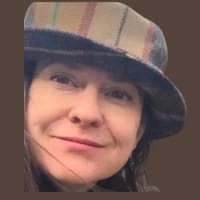
Tiffany Hoyt, DAOM, M.Ac., M.CHM, Dipl. O.M., LAc
Chinese Medicine Doctor
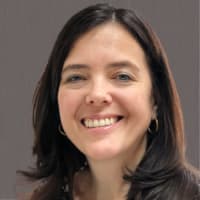
Deirdre Orceyre, ND, MSOM, L.Ac.
Naturopathic and Chinese Medicine Physician, Naturopathic Medical Director
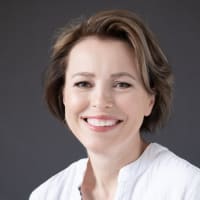
Angela Gabriel, MSOM, LAc, SEP
Chinese Medicine Doctor, Somatic Experiencing Practitioner

Ashley Drapeau, PA-C, L.Ac., MPAS, MAC
Medical Director | Functional Medicine | Long-Covid Program Director
LEARN MORE
What to expect as a patient
- Your First Visit: Your initial appointment is a comprehensive intake — your acupuncturist will spend significant time reviewing your health history, listening to your concerns, and performing a Chinese medicine assessment (pulse, tongue, vital signs). This visit sets the foundation for your personalized treatment plan.
- Your Treatment: Sessions typically last 60–90 minutes for an initial visit and 45–60 minutes for follow-ups. You'll rest comfortably on a treatment table while needles are in place. Most people find the experience deeply relaxing — it's common to drift off to sleep.
- A Collaborative Plan: After your initial visit, your practitioner will discuss a recommended treatment plan with you. Depending on your condition, this may involve a series of weekly sessions at first, tapering as you improve. Chronic conditions often benefit from ongoing maintenance care.
EDUCATION
More About Acupuncture and Chinese Medicine
More About Acupuncture Styles
Classical Rooted in the foundational texts such as the Huangdi Neijing, classical acupuncture works directly with qi, spirit, and the cosmological frameworks of ancient China, prioritizing fidelity to original theory over modern standardization.
TCM (Traditional Chinese Medicine) Developed and systematized in 20th-century China, TCM acupuncture applies a structured, pattern-based diagnostic framework — balancing qi, blood, yin, yang, and the organs — making it the most widely taught and practiced style worldwide.
Japanese styles Japanese acupuncture emphasizes refined palpation, extremely fine needles, gentle insertion, and subtle technique, cultivating a sensitivity-first approach that often produces profound effects with minimal stimulation.
Five Element Developed by J.R. Worsley in the West from classical roots, Five Element acupuncture treats the root cause of suffering at the level of body, mind, and spirit by identifying a person's constitutional element — the deepest layer of who they are.
Korean (including Sa-Am and Koryo) Korean styles developed distinctive theoretical innovations, particularly Sa-Am acupuncture's sophisticated use of tonification and sedation across the five-element generating and controlling cycles using only the twelve primary meridians.
Dry Needling A physical therapy-based technique that inserts needles directly into myofascial trigger points to release muscular tension and reduce pain, operating outside traditional Chinese theory and framed entirely within Western anatomical and neurological models.
FAQ
Common Questions
For most people, acupuncture is surprisingly comfortable. The needles we use are hair-thin — nothing like a syringe — and many patients barely feel them being inserted. You may notice a brief sensation of pressure, warmth, or a mild ache as the needle reaches the acupuncture point, which is actually a sign that it's working. Once the needles are in place, most people relax deeply and many fall asleep.
It depends on your condition and how long you've had it. Acute issues (a recent injury, a cold) may resolve in just one to three sessions. Chronic conditions — pain that's been present for years, digestive problems, hormonal imbalances — typically benefit from a series of weekly treatments at first, then taper to monthly maintenance as you improve. Your practitioner will give you a realistic sense of what to expect at your first visit.
GWCIM is an out-of-network practice and does not bill insurance directly. However, many patients are able to use HSA/FSA funds for acupuncture, and some insurance plans offer out-of-network reimbursement. We recommend checking with your insurance provider. We can provide you with a superbill to submit for potential reimbursement.
Eat a light meal beforehand (don't come on an empty stomach), avoid caffeine a few hours before if possible, and try to leave yourself some buffer time after the appointment so you don't have to rush. It's also helpful to come with a clear sense of your current health concerns and any questions you want to ask.
Yes — and in fact, this is one of the most valuable ways to use acupuncture. It is an excellent complement to conventional care for conditions ranging from cancer (helping manage chemotherapy side effects) to orthopedic issues (supporting recovery from surgery) to chronic disease management. Please let your acupuncturist know all the medications and treatments you're currently receiving so they can tailor your care appropriately.
All of our acupuncturists are experienced, compassionate, and skilled. If you have a specific condition or prefer a particular style of acupuncture, we're happy to help match you with the provider whose background is the best fit. You're also welcome to call our office at 202-833-5055 and speak with our team — we love helping new patients find the right starting point.
Yes. Some patients benefit most from a combination of acupuncture and Chinese herbal formulas; others do well with herbs alone. Dr. Tiffany Hoyt holds a Master's degree in Chinese Herbal Medicine and specializes in herbal prescribing. Your practitioner will discuss whether herbs are a good fit for your health picture.
Moxibustion is a two-thousand-year-old (or more!) therapy that applies heat from burning mugwort herb to acupuncture points to improve Qi flow, warm the body, and relieve pain or fatigue. Backed by clinical evidence, it's safe and effective for conditions like arthritis and breech pregnancies. Moxibustion is often a part of acupuncture treatment. Your provider will explain and demonstrate this treatment before offering it to you.
Acupuncture, moxibustion, and other modalities are safe and beneficial when performed by a licensed acupuncturist trained in prenatal care. It's widely used for nausea, back pain, and labor prep (e.g., 75% breech turn rate with moxibustion combo).
Yes, children can safely receive acupuncture, adapted with gentle, age-appropriate techniques like shallow needling, laser stimulation (no needles), shonishin (Japanese pediatric tools), or acupressure—especially effective for colic, ADHD, asthma, and pain. Pediatric acupuncturists use fewer points and shorter sessions (5-15 min).